Iowa Stops Hunger Podcast: Feeding people through faith: Hope Ministries leader shares about nonprofit’s food insecurity work across Iowa
by lisa rossi
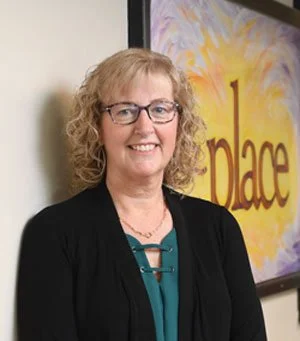
Kathy Coady, chief development officer at Hope Ministries
Kathy Coady is the chief development officer for Hope Ministries, which has helped feed and house people in Des Moines for more than a century. She describes the path that led her to it as a “God story.”
“I did not see this role coming,” she said during a recent Iowa Stops Hunger Podcast episode with Michael Morain, editor of dsm magazine. “It was not in my career plan.”
Her background was in corporate communications and marketing. But about a dozen years ago at her church, her pastor announced an opening at Hope Ministries.
“And I just got one of those God nudges that I needed to … find out a little bit more about Hope Ministries, and it started a big journey,” she said. “I was actively pursuing a career goal, and it was not this one. The Lord had a different plan for me, and it’s been wonderful. His plan is better.”
Since 1915, Hope Ministries has served the community by providing food, shelter and more to people who are struggling to make ends meet. The organization now oversees six ministry centers, including Bethel Mission and Door of Faith, and regularly serves up to 600 meals a day.
Here are five takeaways from our interview with Coady.
Demand for services has grown in the last few years.
“We have expanded our services, so we are now serving, residentially, three times as many women and children as we were a couple of years ago,” Coady said. “Now we’re feeding 100 women and children every day, as opposed to about 30 a couple years ago. In addition to that, we are very full at our men’s shelter, so we have about 20 to 25 more men staying with us every single night, as opposed to a couple years ago. And we continue to see high numbers of people just coming through our doors at Hope Cafe for meals. The meal numbers just continue to grow.”
That growth stems from several factors, including rising prices for groceries and gas.
At Hope Cafe, north of downtown, “we don’t ask a lot of questions when somebody comes to us for help,” Coady said. “So we can learn, sometimes, through conversation and relationship building, what someone’s circumstances are, but it’s often many different stories.”
Most of Hope Ministries’ funding comes from individual donors statewide.
“Over 80% of our funding comes from individual households,” she said. “Those are the people who say, ‘I can provide one meal for $2.36 and I’m going to give somebody else that nourishment and that hope they need.’ … It’s really thousands of people who are choosing to uplift their neighbors.”
Hope Ministries’ work is guided by faith and welcomes all.
“It’s right in our mission statement that we want to give people opportunities for hope, recovery and restoration through the love of Jesus Christ, because we believe that true, lasting transformation is a miracle that Jesus can do and can certainly accomplish in anyone’s life, regardless of your path, your journey, your circumstances,” Coady said. “We want to share the love of Jesus. We provide opportunities. That’s an important word, because we are not trying to pressure or require anyone to take steps in their own faith journey; that is theirs to own.”
Two ways to help: donate and sign up to volunteer online.
“That [monetary] contribution is also going to provide safe shelter and help us walk people through life recovery,” she said. For volunteers, an orientation session called “Hope 101” teaches “a little bit about Hope Ministries, how we serve people and the wide range of opportunities we have. … Volunteers are very essential to us, and we use volunteers every single day in lots of areas of our ministry.”